Despite this longstanding passion, I don’t have a zillion cookbooks, but I have my fair share. When I worked at the Elliott Bay Book Company in Seattle, back in the independent bookshop heyday before the arrival of the chains, the big publishers would let all of us peon booksellers order three books per season (twice a year) from their catalogs. Occasionally, I’d choose a novel, if one of my favorite authors such as Penelope Lively or Anita Brookner was coming out with something new, but mostly I picked cookbooks. Now, more than ten years after leaving the store, I get my fix at Cook’s Library on Third Street in Los Angeles. The staff is terrifically knowledgeable, beginning with the manager, Tim, who I got to know when I worked next door at the Traveler’s Bookcase—we both worked Saturdays, and he always brought in treats from the latest book he was testing. A pine nut and rosemary tart still stands out.
Because I now have to pay for my cookbooks, I don’t accumulate them as rapidly as I used to … with the exception of this year. Perhaps it’s because I’m currently writing my own food book, or because I’ve been reading all these food blogs, which have gotten me even more excited than usual about cooking. Whatever the reason, I acquired some great books over the course of the past twelve months. A few were published this year, a few have been around for ages, but they’re all new and exciting to me. If you’re looking for a gift idea, I would suggest any one of these books.
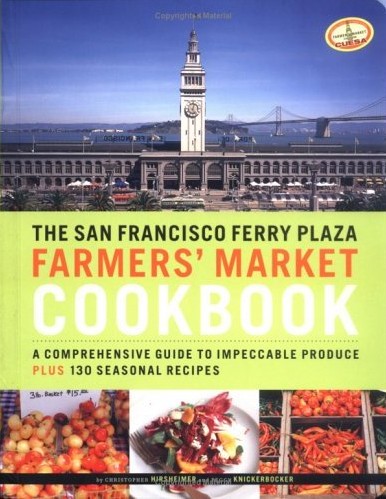 San Francisco Ferry Plaza Farmer’s Market Cookbook
by Christopher Hirsheimer
This is my favorite for 2006. It isn’t hefty and sleek, like so many cookbooks coming out these days. Rather, it’s tasteful and elegant, the Audrey Hepburn of cookbooks, with recipes you want to make and writing you want to read, even if you don’t plan on going into the kitchen for a while. In fact, I think this is one of the best-written cookbooks I’ve read in a while. Love the Peach Bruschetta and Blue Cheese.
Aperitif: Recipes for Simple Pleasures in the French Style
by Georgeanne Brennan and Kathryn Kleinman
This book was given to me by a friend in Paso Robles when I told him about my interest in making nocino. The recipe for Vin de Noix II (In the Style of Mme Marcelle Fine of Sisteron in Haute-Provence) is similar, and I used it to influence my nocino. The book is also a lovely reminder of how civilized sipping an aperitif with a few close friends can be. Next on my Aperitif to do list: Simple Vin De Peche.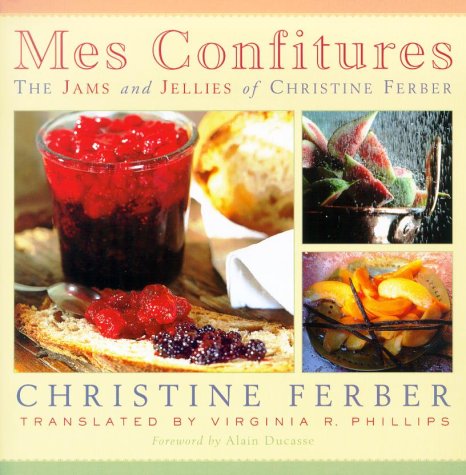 Mes Confitures
by Christine Ferber
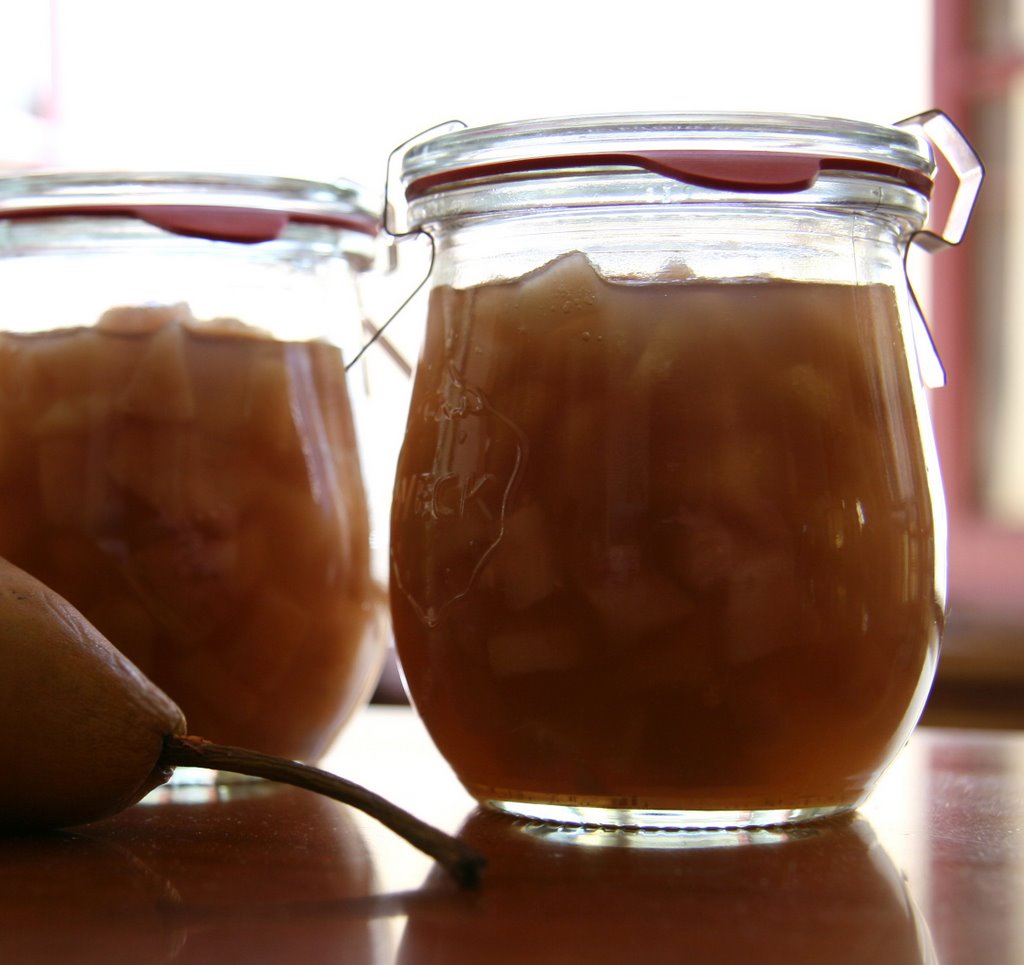
I came to this book by way of Chocolate & Zucchini. It’s not as instructional as a jam novice would like, but it is inspirational. And the first recipe I tried, Pear with Jasmine Mandarin Tea, turned out fabulously. Once the holidays settle down, I can’t wait to try another recipe. The lemons on my tree are just beginning to ripen, and by January they will be perfect for Lemon Jam with Mountain Honey and Cinnamon.
Fig Heaven
by Marie Simmons
I just got this book for my birthday, so I haven’t tried any of the recipes yet. Also, figs have gone out of season in my corner of the world. But once the tree in the back yard of my friend Ann Le is laden with fruit again, I’m going to work my way through this book page by page. Fresh Fig Galette, Chicken Braised with Fennel and Dried Figs, Apricots and Dried Figs in Vanilla Wine Syrup … I can’t wait.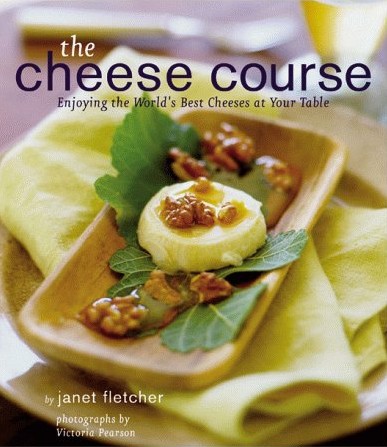 The Cheese Course
by Janet Fletcher
Really, any book with cheese in the title has to be good. This one is excellent, because it focuses on all the wonderful foods besides crackers that you can pair with cheese. Stilton with Port-Glazed Pears. Farmhouse Cheddar with Glazed Cipolline Onions. Cabecou with Honey and Walnuts. I’ve asked for a cheese making kit for Christmas, so this book will come in double handy a couple years from now when my first wheel is done!
On Food & Cooking: The Science and Lore of the Kitchen
by Harold McGee
This is the first of what I consider my three reference book acquisitions this year. I have wanted this book for ages, and then was reminded how much when Bill Bryson talked it up on NPR. Fortunately, my friend Natalie heard the same broadcast, thought of me, and bought this for my birthday. I use it nearly every time I make something, to find out just exactly how pectin and sugar work in jam, how yeast works in bread dough, and so on. This is a kitchen must. Mastering the Art of French Cooking
by Julia Child, Louisette Bertholle, and Simone Beck
Whenever a recipe calls for a technique I’m unsure of, I reach for this book, look up recipes that might use that technique, and read. I have yet to make an actual recipe from it, but it has walked me through many shaky moments with recipes from other sources. Recently, I’ve been working with a very tricky recipe for Vietnamese ragu (a variation on French ragout), and this book has been invaluable.
Essentials of Classic Italian Cook
by Marcella Hazen
This is my Italian cooking resource. Sometimes, when I have a few minutes to spare, I pick it up and just browse through it, reading about ingredients, techniques, etc. The fundamentals section is particularly helpful, providing an excellent foundation for the recipes in the book, as well as providing nice cultural tidbits, such as the history of sage and the Italian attitude toward truffles.
Jamie’s Italy
Jamie Oliver
I love Jamie Oliver. I’ve only seen him on TV, once, for about five minutes, so this isn’t a case of a schoolgirl crush. I love him because he taught me how to make pizza dough, bread, and pasta. He’s not exaggerating when he says his recipes are simple, and he gives you the confidence to literally just throw a bit of this and that into a bowl and see what happens. Plus, his cheeky tone feels natural rather than pretentious. Arabesque: A Taste of Morocco, Turkey, and Lebanon
by Claudia Roden
I have yet to try this one, but Tim at Cook’s Library insists I’m going to love it. I have already stuck Post-It notes on half a dozen recipes, and I plan on suggesting Lebanon or the Middle East in general for the next big theme dinner party that my cousin Jeanne, my sister Julie, and I host about three times a years. What better excuse to try Samak Bil Tarator Bi Senobar—Fish with Pine Nut Sauce?
The Little Saigon Cookbook
by Ann Le
Yes, Ann Le is my friend. And yes, Julie Fay, the photographer, is my sister. But that’s not why I’m recommending this book. Ann has done a great job of weaving the history and culture of Little Saigon (the largest Vietnamese population outside Vietnam, located an hour south of L.A.) with a comprehensive selection of recipes. Ann is a terrific cook; I know from personal experience. BUY THIS BOOK! Where to Shop:
Whenever you can, support your local independent bookstore. For a list of shops in your area, go to BookSense and search by zip code. If you must shop at Amazon, I understand, but when you can, try to remember the little guy first.